Build It and They Will Come: the Neighborhood Hangout
How I designed a system to get kids off screens and playing with each other
Somewhere along the way, childhood became extremely age-segregated.
Same-grade classrooms.
Same-age sports.
Same-age activities.
Same-age friend groups.
But if you actually watch kids naturally gather outside — in neighborhoods, campsites, cul-de-sacs, family parties, backyards — they almost never organize themselves that way.
The little kids follow the big kids.
The big kids teach the younger kids.
Everyone adapts.
Everyone stretches.
Something important happens there that modern childhood is missing.
Because mixed-age play does something screens and adult-led activities often can’t:
it creates a miniature society.
And honestly?
I think a lot of parents are trying to solve this backwards.
We try to:
schedule more,
manage more,
supervise more,
entertain more.
When what actually creates neighborhood play is usually:
momentum.
Not perfection.
Not another organized activity.
An ecosystem.
Neighborhood Play Is an Ecosystem
One of the biggest mindset shifts for me was realizing:
kids playing outside more consistently is usually not about convincing the kids.
It’s about designing the environment around them.
Because kids respond to:
what’s visible,
what feels socially easy,
what other kids are already doing,
what feels accessible,
and where momentum already exists.
That’s why one house in a neighborhood often becomes:
the house.
The basketball hoop house.
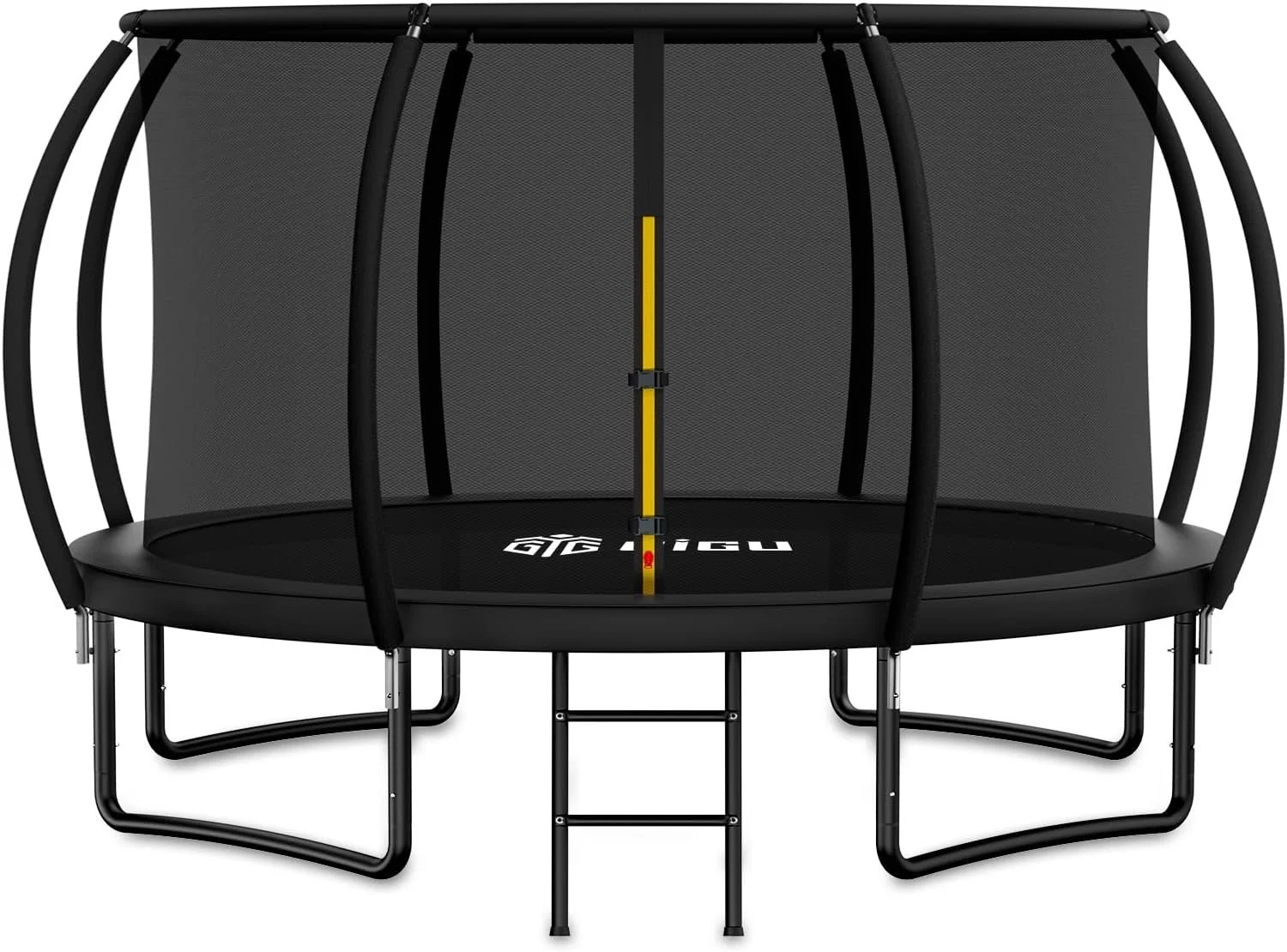
The trampoline house.
The popsicle house.
The driveway chalk house.
Not because the parents are constantly entertaining.
Because the environment creates attraction.
And once enough momentum builds, the system starts running itself.
That’s the sweet spot.
Not:
“parents manually engineering childhood.”
But:
a neighborhood culture that naturally pulls kids outside.
Kids Learn Differently From Other Kids
Research on mixed-age classrooms and play groups has found that younger children often engage in more advanced play when older children are present.
Older children meanwhile naturally practice:
leadership,
negotiation,
nurturing,
cooperation,
and social responsibility.
And honestly, you can see this happen immediately in real life.
A seven-year-old explains the rules of a game to a four-year-old.
An older child slows down automatically for a younger kid on a scooter.
A younger child suddenly attempts something more advanced because they saw an older child do it first.
Kids model kids.
Sometimes more effectively than they model adults.
The American Academy of Pediatrics has repeatedly emphasized that child-directed play supports:
emotional regulation,
problem solving,
resilience,
social development,
and confidence.
And mixed-age play creates unusually rich opportunities for all of that at once.
Stop Treating Outside Play Like an Official Event
I think modern parenting accidentally makes outside play feel overly formal.
Scheduled.
Planned.
Managed.
Optimized.
But historically, neighborhood play worked because kids were constantly orbiting outside casually.
Not:
“scheduled playdates.”
Just:
presence.
Movement.
Momentum.
This is why tiny repeated habits matter so much:
after-dinner bike rides,
kids circling the cul-de-sac,
sidewalk chalk after lunch,
scooters left in the driveway,
watering plants outside,
quick walks to the park,
kids bouncing between yards.
The more outside movement kids see,
the more gravitational pull the neighborhood develops.
Momentum matters.
Repetition Creates Safety
This part is huge.
One-off events are fun.
But recurring rhythms are what actually shape neighborhood culture.
A weekly:
popsicle night,
Friday basketball game,
Sunday scooter ride,
sprinkler evening,
chalk hour,
or flashlight tag night
creates predictability.
And predictability lowers social friction.
Kids begin assuming:
“People are probably outside.”
That expectation changes behavior dramatically.
Moms Quietly Build the Infrastructure
This is one of the hidden drivers of neighborhood play.
Not elaborate hosting.
Not perfectly curated events.
Just enough connection between moms that outside interaction becomes easy.
A simple:
“We’re outside if your kids want to come.”
text changes everything.
Because the easier communication becomes, the lower the activation energy for outside play.
This is where small things matter:
neighborhood text threads
casual “park tonight?” messages
book clubs or bunco that help moms meet initially
block parties
neighborhood Facebook groups
quick driveway conversations
recurring summer gatherings
The goal isn’t adult socializing for its own sake.
It’s creating enough familiarity and communication that kids can move more freely and independently between houses.
That’s what creates neighborhood momentum.
One Family Can Shift the Entire Dynamic
This is the hopeful part.
Neighborhood culture is surprisingly contagious.
One family consistently:
putting out chalk,
hosting popsicle nights,
setting up a basketball hoop,
bringing music outside,
starting scooter rides,
or creating low-friction play opportunities
can shift the entire tone of a neighborhood.
Because kids follow movement.
Momentum builds.
And eventually other kids start showing up automatically.
The Goal Is Low Friction, Not High Production
I think parents sometimes assume community requires elaborate hosting.
But honestly, the strongest neighborhood ecosystems are usually built through:
small,
repeatable,
low-pressure interactions.
Not giant curated events.
Some of the best neighborhood catalysts are incredibly simple:
“Bring your scooters.”
“We’re outside if anyone wants to join.”
“Kids are doing chalk.”
“We’re heading to the park.”
“Flashlight tag after dinner.”
Low production.
High repeatability.
That’s what sustains systems.
The Summer Kickoff Basket Idea
One small thing I’ve started loving is a simple summer kickoff basket for neighbors.
Not expensive.
Not performative.
Just:
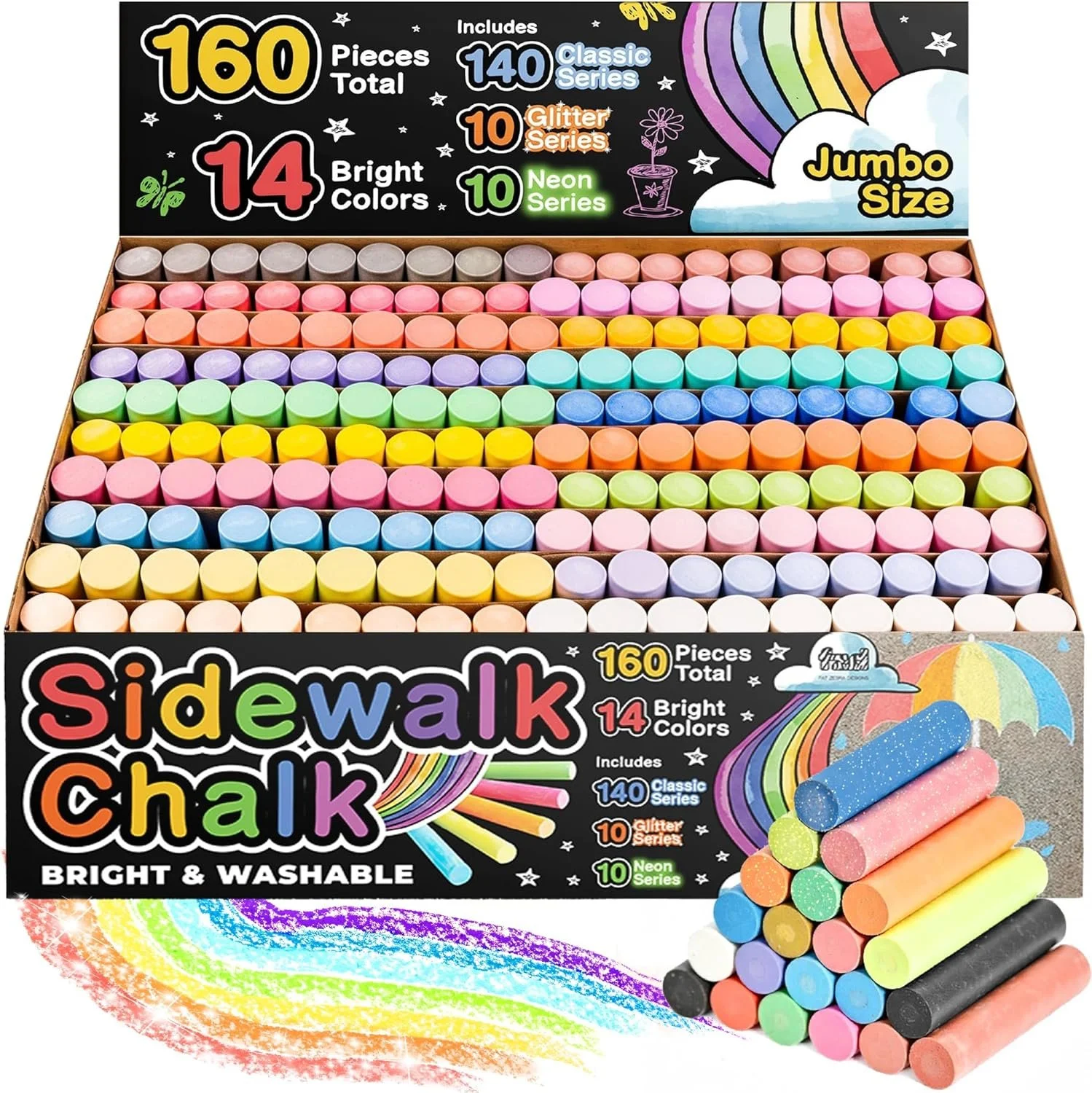
chalk,
bubbles,
jump ropes,
water balloons,
spray bottles,
frisbees,
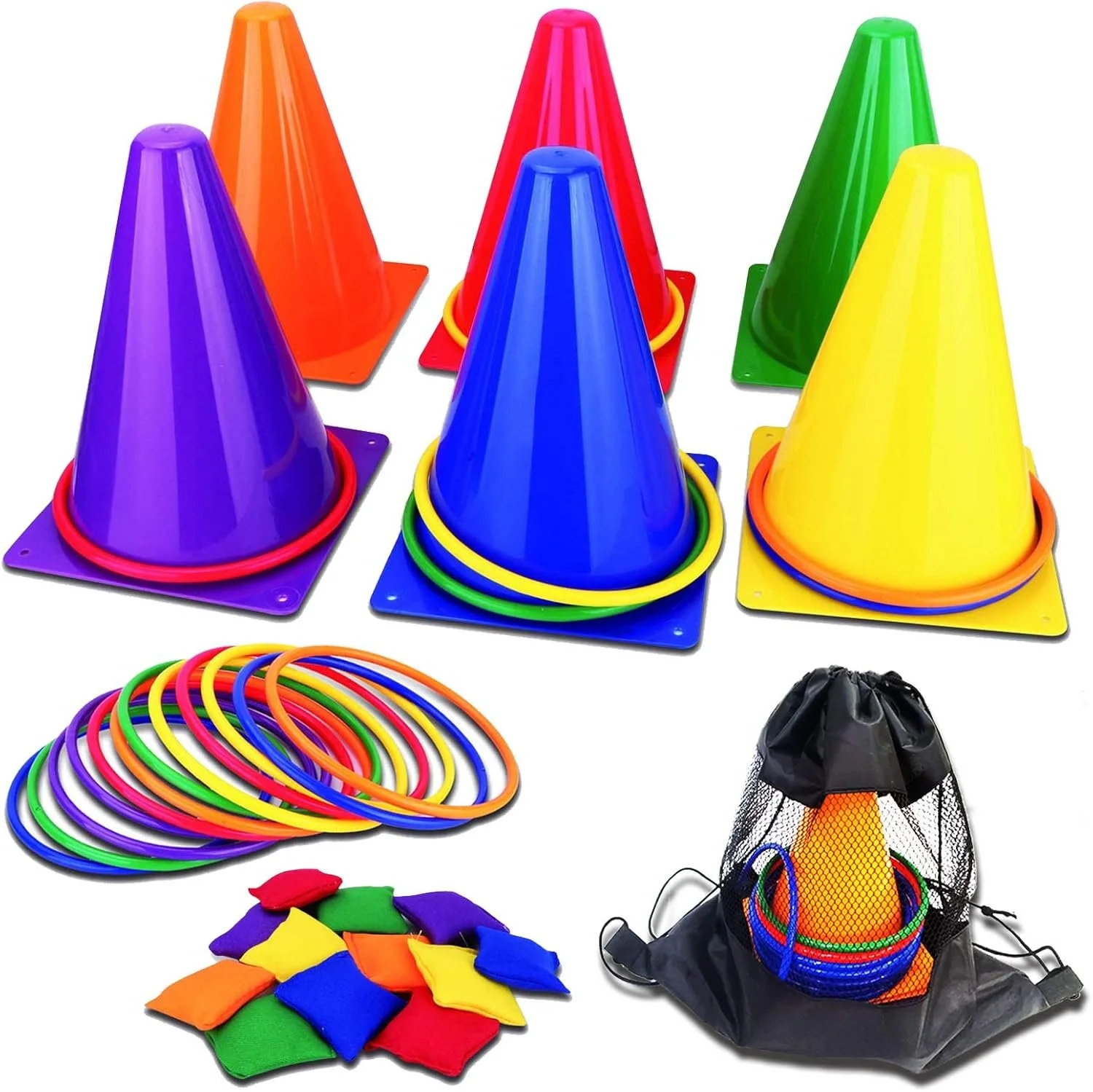
cones,
or sidewalk games.
It works because it quietly signals:
“Kids are welcome here.”
And honestly, it reduces the activation energy for outside play dramatically.
(You can read my full article on the summer kickoff basket idea here.)
Designing a Backyard That Pulls Kids In
Once neighborhood momentum starts forming, certain kinds of toys help sustain it.
The best neighborhood “hub” toys usually:
work across multiple ages,
encourage movement,
allow collaboration,
support open-ended play,
and require very little adult involvement.
That last part matters a lot.
The goal is not:
creating parent-managed activities.
The goal is:
creating environments kids can run with independently.
The Best Toys Are Platforms, Not Activities
This changed how I buy toys completely.
The toys that attract groups of kids for hours are usually not the flashiest.
They’re the most flexible.
Things like:
trampolines,
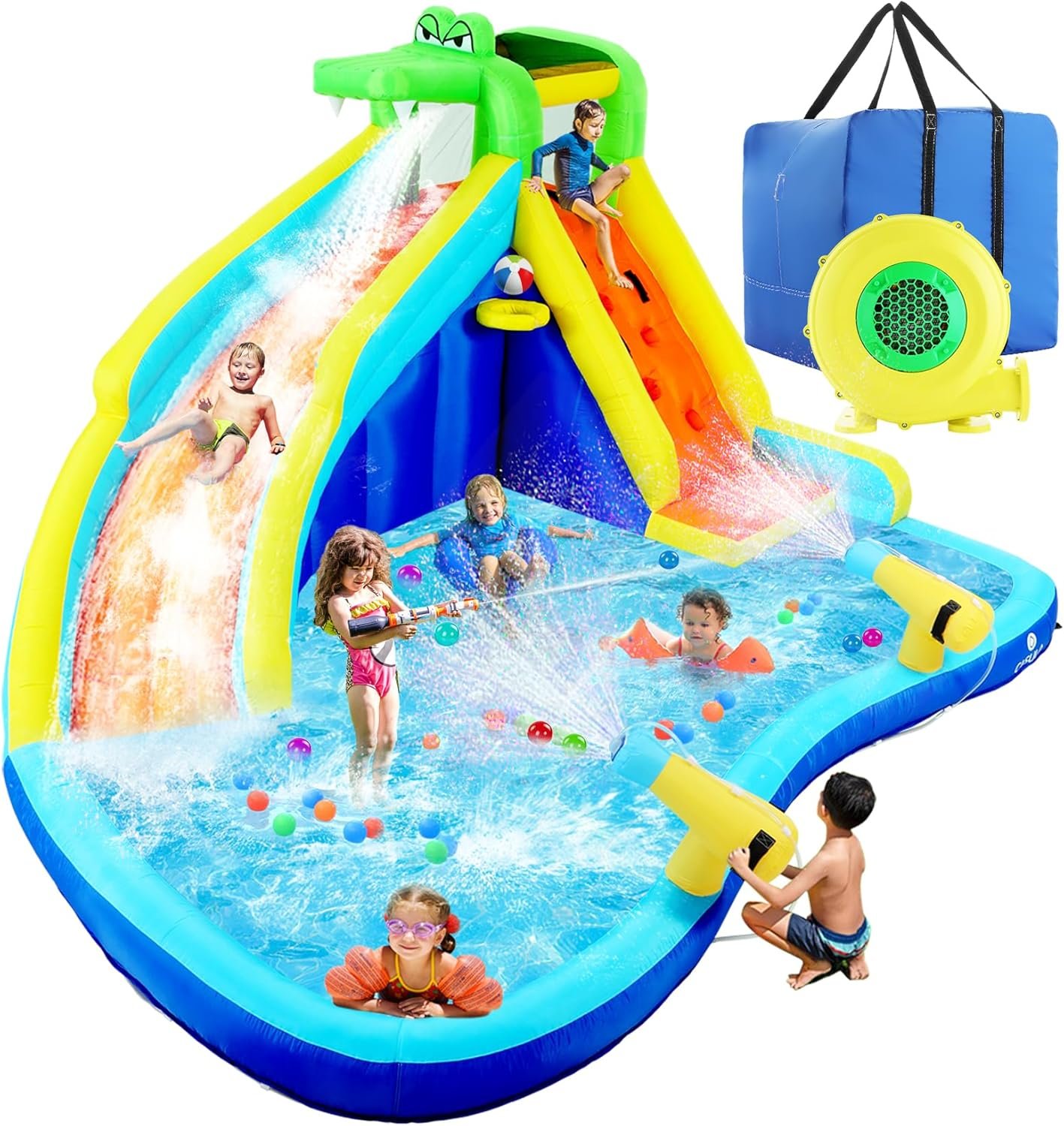
large inflatables,
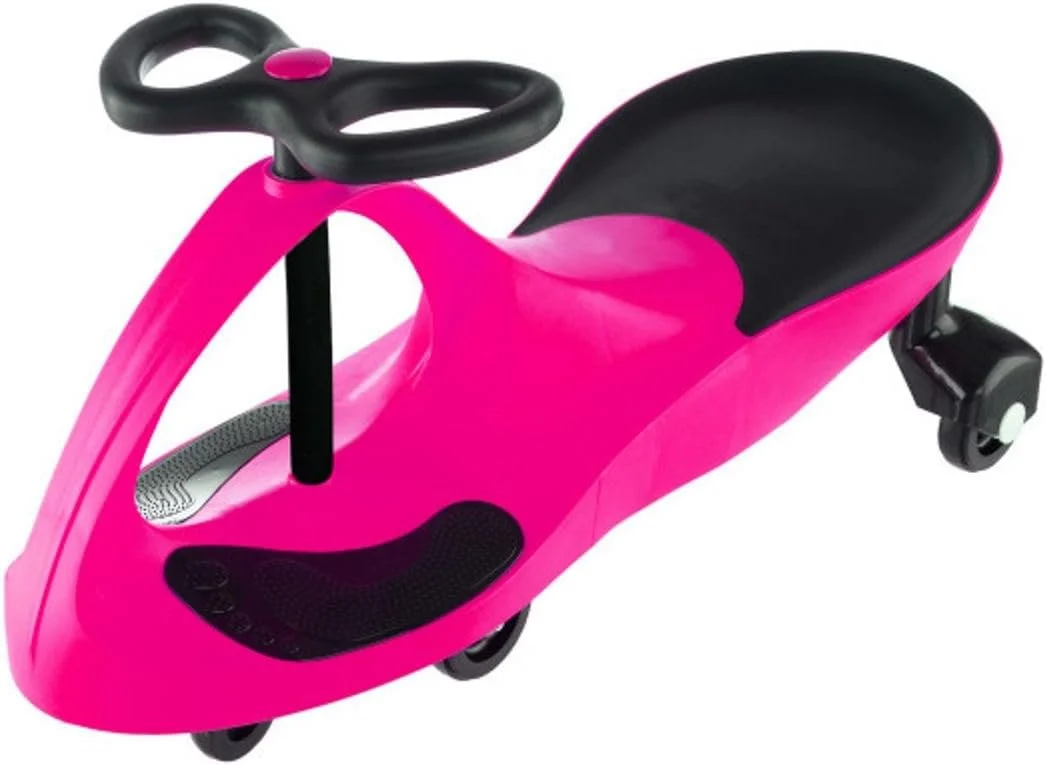
wiggle cars,
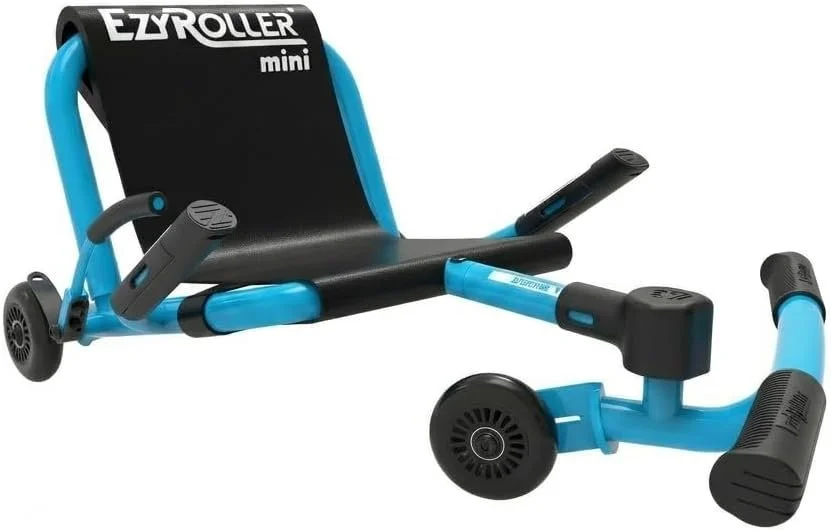
scooter boards,
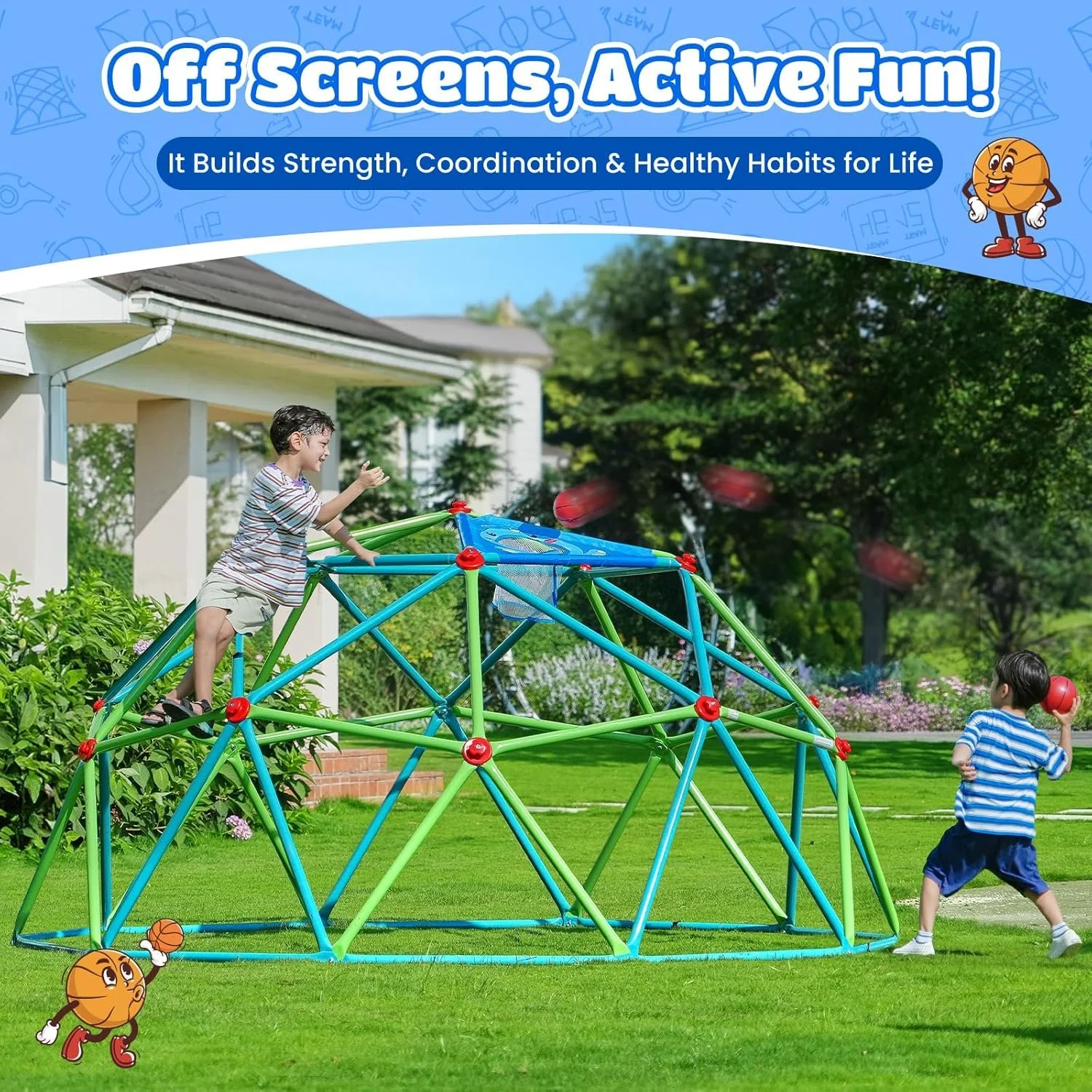
climbing domes,
sports equipment,
Nerf gear,
water balloons,
cones,
chalk buckets,
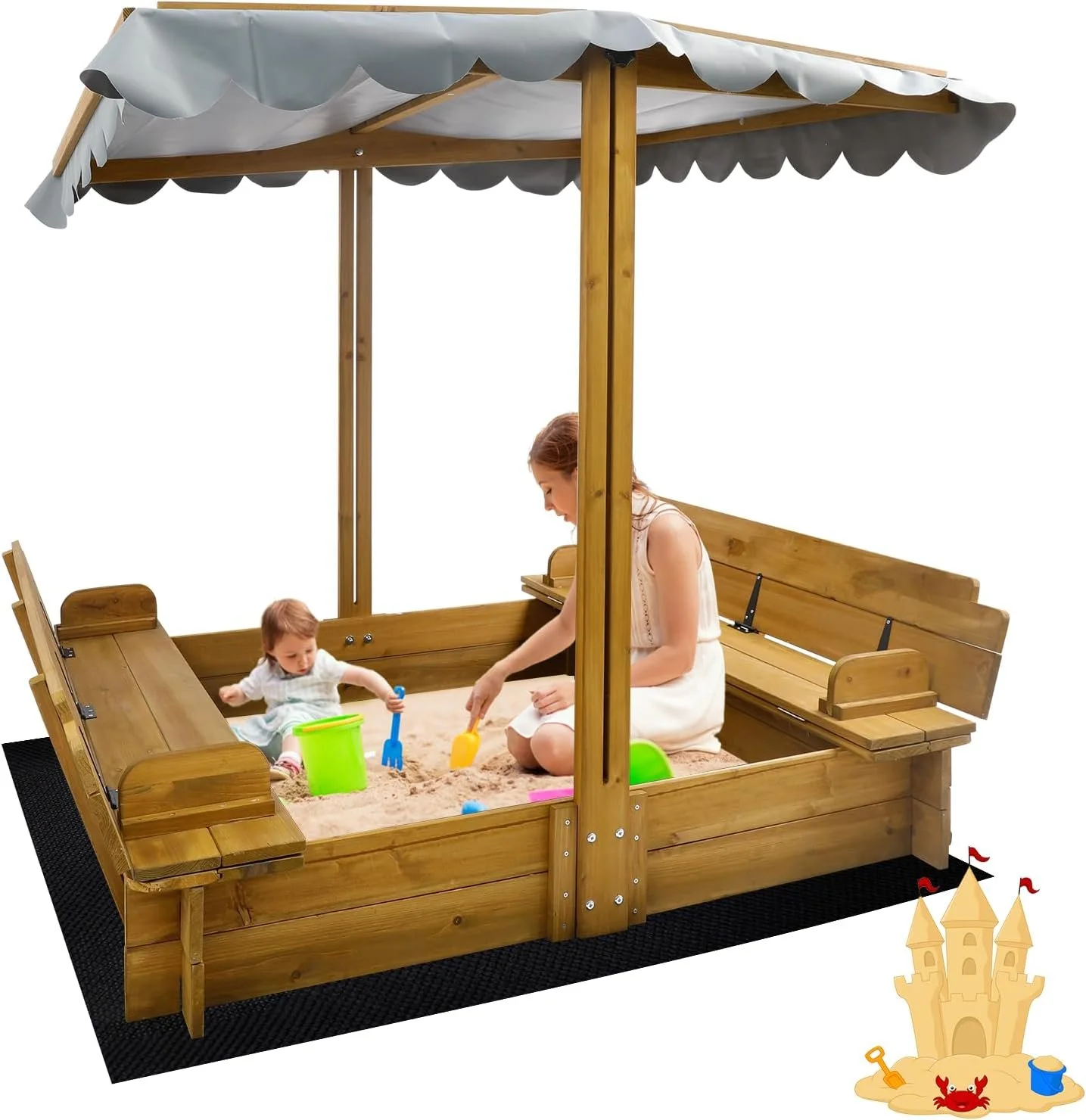
sandboxes,
or giant bubble wands.
Because kids continuously reinvent them.
A trampoline becomes:
a stage,
a wrestling ring,
a gymnastics arena,
a spaceship,
or a lava escape challenge.
Open-ended play scales beautifully across ages.
That’s what creates staying power.
Minimal Adult Supervision Is Actually a Feature
One of the biggest missing ingredients in modern childhood is slightly unsupervised collaborative play.
Not unsafe.
Not chaotic.
Just enough freedom for kids to negotiate their own little society.
The kids solve disputes.
Adjust rules.
Organize games.
Include younger siblings.
Create imaginary worlds.
Modify challenges.
Adults don’t need to intervene every thirty seconds.
That autonomy is where so much growth happens.
Attract > Entertain
The biggest shift is this:
Stop thinking about entertainment.
Start thinking about attraction.
What naturally pulls kids outside?
What keeps mixed ages engaged?
What creates momentum?
What scales socially?
What lowers friction for connection?
Because once a neighborhood develops enough outside momentum, something powerful happens:
The system becomes self-sustaining.
And honestly?
That’s what most exhausted parents are really looking for.
Not more activities to manage.
Just a childhood ecosystem that starts running more naturally on its own.
Because kids were never really designed to grow up isolated indoors around only same-age peers.
They were designed to grow up in little packs.
Shop Ideas From This Retro


Note: I may receive commission from the affiliate links in this article.